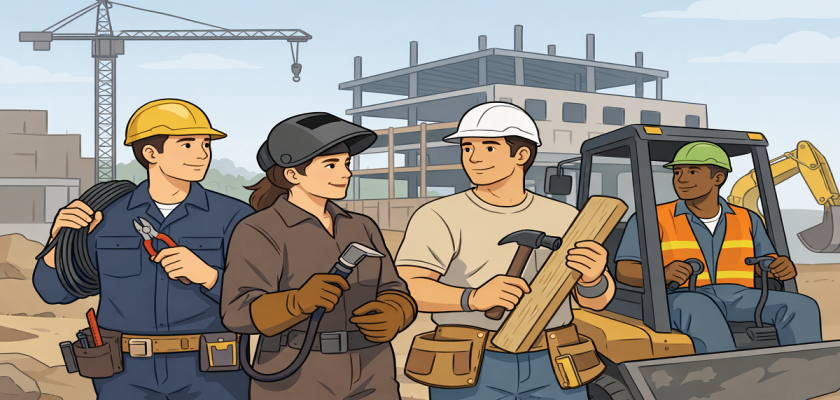
The construction industry is one of the largest employment sectors in the world and continues to grow rapidly as cities expand, infrastructure improves, and housing demand increases. From residential homes to large-scale commercial projects, construction work requires a wide range of skilled professionals who ensure that buildings are safe, functional, and durable.
In 2026, the complexity of modern building—incorporating green energy, AI-driven climate control, and smart materials—has elevated the role of the skilled tradesperson to a technical expert level.
According to global standards maintained by the International Labour Organization (ILO), skilled trades are the primary engine of sustainable urban development and a major source of high-quality employment worldwide.
While many people associate construction with general labor, the industry actually offers numerous high-paying skilled trade jobs. These careers require technical knowledge, hands-on training, and specialized skills that are essential for completing complex construction projects.
Skilled tradespeople are highly valued because their expertise directly impacts the quality and safety of construction work. For individuals who enjoy practical work, problem-solving, and working with tools and technology, skilled trade jobs in construction can offer excellent career opportunities.
Many of these roles provide competitive salaries, long-term job stability, and opportunities for advancement without requiring a traditional four-year college degree. If you are exploring entry points, check our guide on best construction careers without a degree.
What Are Skilled Trade Jobs in the Construction Industry?
Skilled trade jobs in construction refer to specialized occupations that require technical training, apprenticeships, or vocational education. These jobs involve hands-on work using tools, machinery, and technical knowledge to build, install, repair, and maintain structures.
Unlike general labor roles, skilled trades require a higher level of expertise and certification. In the 2026 job market, “skilled” also means being able to interpret digital twins of buildings and using IoT-enabled tools.
Workers in these professions typically complete apprenticeships, trade school programs, or industry certifications before becoming fully qualified.
Because of this specialized training, skilled trade professionals are often in high demand across construction companies, infrastructure projects, and private contracting businesses.
This demand is even higher for those seeking visa sponsorship jobs, as countries like the UK, Canada, and Australia actively recruit foreign tradespeople to fill critical labor shortages.
Why Skilled Trades Are Important in Construction?
Skilled trades are the backbone of the construction industry. Without trained professionals, buildings could not be safely constructed, electrical systems would not function properly, and plumbing systems would fail. Each skilled trade plays a critical role in ensuring that construction projects meet safety standards and building codes.
In an era where sustainable building practices are mandatory, tradespeople are the ones implementing energy-efficient solutions that reduce carbon footprints.
Another reason skilled trades are so important is the growing shortage of qualified workers. Many experienced tradespeople are retiring, creating opportunities for younger workers to enter the industry.
As a result, skilled construction jobs often offer strong job security and competitive wages. Furthermore, the specialized nature of these roles makes them less susceptible to automation compared to office-based administrative jobs.
Top Detailed Skilled Trade Careers in 2026
1. Electrician: The Master of Energy Systems
Electricians are responsible for installing, maintaining, and repairing electrical systems in buildings. Their work includes wiring structures, installing circuit breakers, connecting lighting systems, and ensuring that electrical systems comply with strict codes.
In 2026, the role has expanded to include solar photovoltaic installations, electric vehicle (EV) charging stations, and smart home automation. This profession requires strong technical knowledge and attention to detail because electrical mistakes can cause serious hazards.
Electricians typically complete 4-5 year apprenticeships and obtain licenses before working independently. With the global shift toward electrification, they remain one of the most in-demand professionals in the construction sector.
2. Plumber: Managing Essential Infrastructure
Plumbers install and maintain water supply systems, drainage systems, and gas lines. Their work ensures that buildings have clean water, proper sanitation, and efficient waste disposal. Beyond traditional pipe fitting, 2026 plumbers work with greywater recycling systems and high-efficiency heat pumps.
The plumbing trade requires excellent problem-solving skills and technical expertise. Plumbers must understand building plans, hydraulic systems, and safety regulations.
Because plumbing services are always necessary in both construction and maintenance, these professionals often enjoy recession-proof job stability and immense earning potential as independent contractors.
3. Carpenter: The Craftsman of Modern Structures
Carpenters are skilled craftsmen who build and install structural components made from wood, metal, and composite materials. Their work includes framing buildings, installing doors and windows, and creating custom woodwork.
Modern carpenters also specialize in Cross-Laminated Timber (CLT) and high-performance insulation. Carpentry requires precision, creativity, and strong measurement skills. Experienced carpenters can specialize in areas such as residential framing or fine finish carpentry.
Since nearly every project requires structural work, this trade remains fundamental to the industry. For beginners looking to enter this field, our guide on best construction jobs for beginners provides excellent starting tips.
4. Welder: Joining the Structural Framework
Welders join metal components together using specialized equipment and high temperatures. Their work is essential in projects involving steel structures, pipelines, bridges, and heavy equipment. Modern welding in 2026 often involves robotic assistance and advanced metallurgical knowledge.
This trade requires rigorous technical training and strong attention to Safety procedures. Skilled welders must understand various techniques (MIG, TIG, Stick) and materials.
As steel remains a primary building material for skyscrapers and industrial plants, welding professionals are highly valued worldwide.
5. Heavy Equipment Operator: The Site Muscle
Heavy equipment operators control large machinery such as bulldozers, excavators, cranes, and loaders. These machines are essential for tasks like digging foundations and moving tons of material.
In 2026, many of these machines are semi-autonomous and require operators to have high digital literacy. Operating heavy equipment requires specialized training and certifications. Operators must have excellent coordination to manage large machines on busy sites.
As international infrastructure development continues, demand for these operators remains strong, particularly for heavy machinery operator jobs in the Middle East.
6. HVAC Technician: Climate Control Specialist
HVAC technicians install and maintain heating, ventilation, and air conditioning systems. Their work ensures comfortable indoor temperatures and energy-efficient climate control. This trade requires knowledge of electrical systems, refrigeration cycles, and airflow management.
Modern HVAC roles are increasingly technical, focusing on smart building integrations and environmentally friendly refrigerants. HVAC technicians are essential not just during construction but for the entire lifecycle of a building, ensuring consistent maintenance work.
7. Mason (Brick and Stone Mason)
Masons specialize in building structures using bricks, concrete blocks, and natural stones. Their work includes constructing walls, walkways, and decorative elements. This trade requires physical strength, precision, and an understanding of material science.
Skilled masons play a key role in both structural durability and aesthetic design. In 2026, masons are increasingly using specialized coatings to improve building longevity and energy efficiency.
8. Construction Estimator: The Financial Planner
Construction estimators analyze project plans and calculate the costs required for completion. Their responsibilities include estimating materials, labor, and equipment needs.
While less physically demanding, it requires strong analytical skills and proficiency in specialized estimation software. Estimators help companies stay profitable and ensure that projects remain financially feasible from start to finish.
9. Roofing Specialist
Roofers install and repair roofing systems, including shingles, metal roofing, and waterproof membranes. Their work protects buildings from weather damage and is critical for energy conservation.
In 2026, many roofers are specializing in “Green Roofs” and integrated solar roofing. Because roofs require regular maintenance, skilled roofers are always needed in both construction and renovation sectors.
10. Drywall Installer and Finisher
Drywall installers create interior walls and ceilings, ensuring smooth surfaces for painting and decoration. This trade requires speed, precision, and a high attention to detail during the finishing stage. Skilled drywall professionals contribute significantly to the final aesthetic quality of residential and commercial interior spaces.
In-Depth: Skills and Training for 2026 Success
To thrive in the skilled trades today, technical ability is only half the battle. Workers must now focus on Multi-Trade Literacy. For example, a carpenter who understands basic electrical wiring is much more valuable on a smart-home project than one who does not.
Furthermore, digital literacy for workers has become a non-negotiable requirement. Reading blueprints from a tablet and using AR (Augmented Reality) to visualize pipe placements are becoming standard practices.
Safety is the most critical skill. Following international construction safety standards ensures not just your personal well-being but the success of the entire project. Comprehensive physical safety training is mandatory for anyone looking to advance into foreman or site supervisor roles.
Benefits of Working in Skilled Construction Trades
The advantages of a trade career are numerous. First is the ability to earn while you learn through apprenticeships. Unlike university students who pay tuition, apprentices are paid a wage that increases as they gain skills. Second is job security.
You cannot outsource the wiring of a house or the fixing of a pipe to another country. Third is the potential for entrepreneurship. Most skilled tradespeople eventually start their own contracting firms, giving them complete control over their schedules and income.
FAQs About Skilled Trade Jobs In Construction Industry
1. Do I need a college degree?
No. Most trades require vocational training or apprenticeships rather than a 4-year degree.
2. Which trade pays the most in 2026?
Elevator Mechanics, Specialized Electricians, and Heavy Crane Operators currently have the highest hourly rates.
3. Is construction work safe?
Yes, modern safety regulations and advanced PPE make construction safer than ever before.
4. How do I start?
Look for local union apprenticeships or trade school programs in your area.
5. Can I work internationally?
Yes! Certified trades like welding and electrical work are highly transferable across borders.
Conclusion
The construction industry offers a wide range of skilled trade jobs that provide stable employment, strong earning potential, and career growth. From electricians to welders, these professionals are building the foundation of our modern society.
With dedication and specialized training, a career in the skilled trades is one of the smartest and most rewarding paths you can choose in 2026. Whether you are aiming for domestic stability or international opportunity, the trades are your gateway to success.


