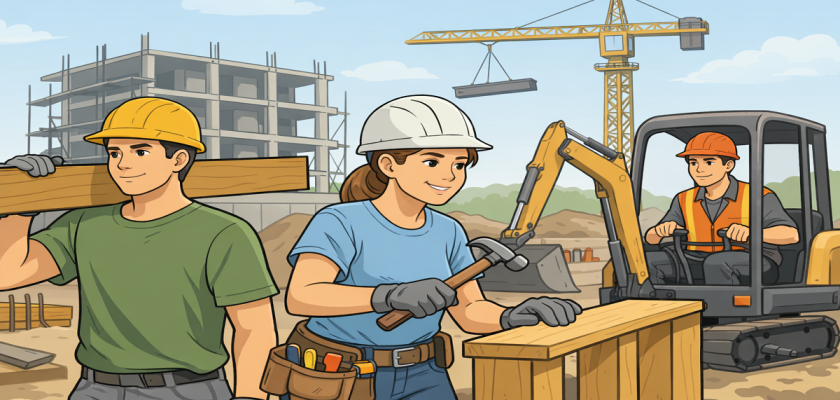
Construction is one of the largest employment sectors in the world and offers many opportunities for people who want to start a practical, hands-on career. Unlike many industries that require years of formal education, construction allows beginners to enter the workforce quickly while learning valuable skills on the job.
In 2026, the global construction market is expanding more than ever, driven by smart city initiatives and massive infrastructure overhauls in both Western and Middle Eastern regions.
With the right training and dedication, many entry-level workers can grow into highly skilled professionals with stable and well-paying careers.
For individuals who enjoy physical work, teamwork, and seeing tangible results at the end of the day, construction jobs can be very rewarding. Many beginner roles do not require previous experience and instead focus on reliability, willingness to learn, and basic physical fitness.
These jobs also serve as stepping stones toward advanced trades such as carpentry, electrical work, plumbing, and project management. For those looking for international paths, understanding visa sponsorship jobs is the first step toward a global career.
Why Construction Jobs Are Ideal for Beginners?
The construction industry is known for offering opportunities to individuals with little or no previous experience. Many companies provide on-the-job training where beginners learn practical skills while earning income. This makes construction one of the most accessible industries for people who want to start working quickly without investing years in expensive formal education.
In 2026, we see a shift where many companies are desperate for “green” talent that they can mold into specialized technicians.
Another advantage is career growth. Entry-level positions allow workers to develop skills such as teamwork, equipment handling, safety awareness, and technical knowledge.
Over time, these skills can lead to specialized trades and supervisory roles that offer significantly higher pay and stability. If you are starting out, you might also be interested in exploring best construction careers without a degree to see where you can end up in five years.
Top 10 Entry-Level Construction Roles for 2026
1. General Construction Laborer
A general construction laborer is the most common entry-level role. Laborers perform a wide variety of tasks that support the entire construction team. These tasks may include carrying materials, cleaning work areas, preparing tools, assisting skilled workers, and helping with site preparation.
This job is ideal for beginners because it requires minimal experience and provides exposure to different construction processes. It is the ultimate foundation for anyone wanting to learn the “language” of the construction site.
2. Construction Helper
Construction helpers work alongside skilled tradespeople such as electricians, plumbers, or carpenters. Their primary responsibility is to assist professionals by preparing tools, holding materials, and supporting various project tasks.
This role is particularly valuable for beginners who want to specialize. By assisting an electrician, you learn the basics of wiring; by assisting a plumber, you understand piping systems.
3. Construction Site Cleaner & Maintenance
Safety starts with cleanliness. A site cleaner ensures that debris, leftover materials, and waste are properly removed. While it sounds simple, understanding waste management and hazardous material disposal is a key part of international construction safety standards. This role gets you used to the hectic environment of a building site while keeping everyone safe.
4. Carpenter Assistant
Carpentry is a core trade. An assistant supports carpenters in building structures such as walls, floors, and frameworks. Typical duties include measuring materials and cutting wood under supervision.
This role is perfect for beginners interested in woodworking or structural building. Over time, assistants can eventually move into higher-paying roles like those found in high-paying construction trades.
5. Equipment Operator Trainee
Modern projects rely on heavy machinery. Trainees assist experienced machine operators and gradually learn how to operate excavators and bulldozers safely.
While you won’t drive a crane on day one, you will learn about telematics, GPS grading, and maintenance. For many, this leads to lucrative heavy machinery operator jobs.
6. Construction Safety Assistant
If you are detail-oriented, this is for you. Safety assistants help ensure workers wear proper PPE and follow hazard protocols. This role often involves documentation and reporting, which is a great entry point for someone who prefers a mix of field work and administrative duties. It requires a high level of physical safety training awareness.
7. Demolition Worker
Demolition is the first stage of most urban projects. Workers dismantles buildings and clear areas safely. This job provides valuable experience with hand tools, power tools, and material identification.
It’s physically demanding but provides a unique perspective on how buildings are put together by seeing how they come apart.
8. Concrete Worker Assistant
Concrete is the most used building material in the world. Assistants help with mixing, pouring, and leveling concrete for foundations and sidewalks. This trade is highly specialized, and mastering concrete finishing can lead to very steady work in any country.
9. Material Handler
Material handlers are responsible for logistical movements on-site. They move lumber, steel, and bricks to where they are needed. This role teaches you about material properties and site organization, which is essential for future management roles.
10. Painter and Finisher Assistant
Finishing work is all about detail. Assistants help prepare surfaces, mix paints, and apply coatings. This is less physically taxing than masonry or demolition but requires a high degree of precision and patience.
Essential Tools Every Beginner Should Know
To succeed in 2026, a beginner needs to be familiar with more than just a hammer. Modern construction sites use a blend of manual and digital tools. Beginners should learn about:
- Standard Hand Tools: Hammers, tape measures, levels, and utility knives.
- Power Tools: Drills, impact drivers, and circular saws (with proper training).
- Digital Literacy: Understanding tablets for reading blueprints and using site-management software. Many global employers now prioritize digital literacy for workers.
- Safety Gear (PPE): Hard hats, high-visibility vests, steel-toed boots, and ear protection.
Top 5 Countries for Entry-Level Construction Careers
If you are looking for the best places to start your journey, these countries offer the best balance of training and wages:
- United Arab Emirates (UAE): Massive urban projects in Dubai and Abu Dhabi always need new workers.
- Saudi Arabia: With the NEOM project, they are recruiting thousands of trainees globally.
- United Kingdom: Strong apprenticeship programs and a huge housing demand.
- Canada: Offers specialized pathways for skilled and semi-skilled laborers.
- Australia: High wages and a massive mining/infrastructure sector that welcomes beginners.
How to Advance Your Career from Beginner to Specialist?
Starting as a beginner is just the first step. To increase your salary and stability, you must follow a path of continuous learning. Most successful workers follow this progression:
- Stage 1: General Laborer (Years 0-1) – Learning site etiquette, basic tools, and safety. Focus on showing up on time and being reliable.
- Stage 2: Apprentice/Helper (Years 1-3) – Choosing a specific trade and working under a master craftsman. This is where you gain technical mastery.
- Stage 3: Journeyman/Specialist (Years 3-5) – Working independently on complex tasks. At this stage, you can often apply for visa sponsorship for skilled workers.
- Stage 4: Foreman or Business Owner (Years 5+) – Managing teams or starting your own contracting firm.
FAQs About Construction Jobs for Beginners
1. What is the easiest construction job to start with?
General laborer is the most accessible. It requires no previous training and gets you on-site immediately to learn the basics.
2. Do I need a high school diploma?
While many entry-level jobs don’t strictly require one, having a basic education helps with reading blueprints and safety manuals.
3. Can women start as beginners in construction?
Absolutely. In 2026, there are more women in construction than ever before, with specific grants and training programs designed for them.
4. How do I get my first construction job?
The best way is to visit local sites, apply through specialized job boards, or join a local union’s apprenticeship program.
5. What is the working schedule like?
Most sites start early (around 7 AM) and finish by 3 or 4 PM. Overtime is common during peak project phases.
Conclusion
The construction industry offers a unique and rewarding path for beginners who are willing to put in the work. From general labor to specialized assistants, the entry-level roles available in 2026 provide the perfect foundation for a lifelong career.
By focusing on safety, reliability, and continuous skill development, you can move from a trainee to a high-earning specialist in just a few years. Whether you are building your career locally or looking for international opportunities, the construction sector is ready to welcome you.


